
How to Set Up an Inflatable Sports Games Area for Large Events
Large events such as school sports days, corporate gatherings, community festivals, family fun days, and outdoor celebrations often need activities that attract attention and encourage participation. An inflatable sports games area can be an effective way to create an engaging recreational zone where guests compete, cooperate, and enjoy physical challenges.
However, setting up a successful area requires more than selecting a few attractive inflatables. Organizers must consider venue layout, participant flow, equipment selection, safety measures, staffing, power requirements, and maintenance. Careful planning helps create an organized experience while reducing unnecessary delays and operational problems.
Whether you are planning a school event or a large commercial gathering, this guide explains how to design and manage an inflatable sports games area that suits your audience and venue.
1. Define Your Event Goals and Audience
Before selecting equipment, determine what you want the inflatable sports games area to achieve. Different events have different objectives, and these should influence the activities you choose.
For example, a school sports day may focus on physical activity, teamwork, and friendly competition. A corporate event may emphasize communication and team-building, while a public festival may prioritize entertainment and participation from a broad audience.
Consider the following questions:
- Who will participate: children, teenagers, adults, or mixed age groups?
- How many people are expected to use the area?
- Will activities be competitive, recreational, or a combination of both?
- How much time will each participant or group have?
- Will the games operate throughout the event or during scheduled sessions?
- Are there accessibility requirements or other specific participant needs?
Answering these questions helps you select suitable attractions and estimate the space, staff, and resources required.
2. Choose Inflatable Sports Games for Your Event
The equipment you select will shape the overall experience. A varied selection of activities can appeal to different interests and prevent the area from becoming repetitive.
When comparing Inflatable Sports Games, consider the age group, available space, expected attendance, installation requirements, and manufacturer’s stated operating conditions.
Popular options include the following.
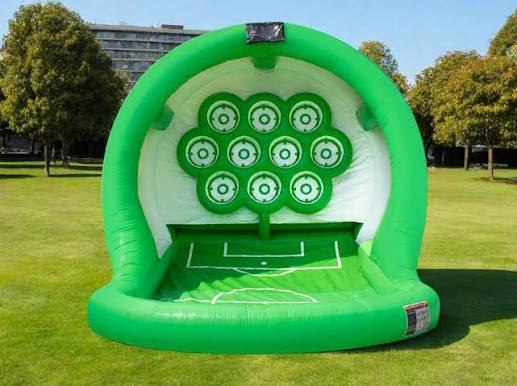
Inflatable Football Target Games
These games challenge participants to kick a ball toward designated targets or scoring zones. They are suitable for short competitions because participants can understand the objective quickly.
Organizers can introduce individual challenges, friendly team contests, or timed rounds, provided the rules remain consistent with the equipment’s intended use.
Inflatable Basketball Shootouts
Basketball-style inflatable games allow participants to test their shooting accuracy. They can be useful at school events, corporate gatherings, and community festivals.
If several people will participate, establish a clear waiting area and ensure that spectators remain outside the playing zone.
Inflatable Obstacle Courses
Obstacle courses feature challenges such as tunnels, barriers, climbing sections, and slides, depending on the design.
They can become a central attraction at larger events, but they generally require more space, supervision, and careful participant management than small target games.
Inflatable Human Foosball
Human foosball brings participants together in a team-based game inspired by table football. Players work together to move the ball and score against their opponents.
This format can be particularly suitable for corporate team-building activities and group competitions.
Multi-Activity Inflatable Games
Some products combine several recreational challenges in one structure. These can help organizers offer more variety without creating a separate installation for every activity.
Before purchasing or renting any product, confirm its dimensions, participant limits, installation instructions, and suitability for the intended audience.
3. Select a Suitable Venue
The venue must accommodate the inflatable structures, their operating areas, and the movement of participants and staff.
Large events may take place in parks, school grounds, sports fields, exhibition spaces, or designated outdoor event venues. Each location presents different considerations.
Measure the Available Space
Start by measuring the proposed activity area. Include more than the footprint of each inflatable. You may also need space for:
- Safe entry and exit points.
- Queuing and waiting areas.
- Spectator zones.
- Staff positions and equipment access.
- Emergency routes.
- Separation between adjacent activities.
Use the manufacturer’s stated dimensions and clearance requirements when planning the layout.
Inspect the Ground or Floor
For outdoor events, assess whether the surface is suitable for the equipment and its anchoring system. The installation area should meet the manufacturer’s requirements and be free from hazards such as sharp objects, debris, and unexpected holes.
For indoor events, check floor suitability, ceiling height, access routes, and any restrictions relating to ventilation, electrical connections, or building use.
Consider Weather and Drainage
Outdoor organizers should review the product’s wind, rain, and temperature restrictions. The venue should also allow water to drain appropriately and help prevent the installation area from becoming unsuitable during the event.
If conditions exceed the manufacturer’s operating limits, the affected attraction should not be operated.
4. Create a Practical Layout for Large Crowds
A well-designed layout allows visitors to understand where to go, reduces congestion, and helps staff monitor activities.
Avoid placing every inflatable close together simply to maximize the number of attractions. Each structure needs the clearances specified by its manufacturer, and participants should be able to move safely between activity zones.
Establish Separate Activity Zones
For a large event, divide the area into clear sections.
Entry and information zone: Place signs near the entrance explaining available activities, age restrictions, basic rules, and any registration requirements.
Activity zone: Position each inflatable according to its dimensions, operating needs, and supervision requirements.
Queue zone: Provide a designated waiting area for each popular attraction or group of attractions.
Spectator zone: Keep spectators outside the operating area and away from access points.
Staff and equipment zone: Reserve suitable space for approved blowers, power equipment, supplies, and staff access without obstructing public routes.
Emergency access zone: Keep emergency routes clear and accessible throughout the event.
Keep Participant Movement Predictable
Where possible, create a simple flow from the entrance toward the activities and then toward the exit or next attraction. Avoid layouts that force people to cross active play areas or move behind structures where staff cannot easily observe them.
For especially large events, use signs, barriers, or floor markings appropriate to the venue to guide movement.
5. Plan Installation and Setup in Advance
Inflatable attractions should be installed according to their specific instructions. Setup requirements vary by size, construction, and intended use, so avoid assuming that every product can be installed in the same way.
A practical setup process includes the following steps:
- Confirm delivery and access. Make sure vehicles and equipment can reach the installation area and that the delivery schedule allows sufficient preparation time.
- Inspect the equipment. Check the inflatable, seams, attachment points, accessories, and specified inflation system for visible damage or missing components.
- Prepare the installation surface. Remove unsuitable debris and confirm that the surface meets the manufacturer’s requirements.
- Position the inflatable. Place it according to the planned layout, ensuring required clearance from other attractions, structures, and public routes.
- Install the required anchoring or stabilization system. Use the methods and components specified for the product and site conditions.
- Connect the approved inflation system. Follow the manufacturer’s electrical and operating instructions, including any requirements for suitable power supplies and cable protection.
- Complete pre-opening checks. Confirm that inflation, anchoring, access points, and surrounding clearances are satisfactory before allowing participants to enter.
Large or complex inflatables may require trained installers or professional support. Schedule setup well before guests arrive so there is enough time to resolve problems without disrupting the event.
6. Prioritize Safety and Risk Management
Safety should be built into every stage of planning, from product selection to the final shutdown.
Inflatable sports games can involve bouncing, running, kicking, climbing, or sliding. The risks vary by activity, so each attraction needs controls appropriate to its design and intended participants.
Follow Manufacturer Requirements
Before opening an attraction, review its operating manual and any applicable local regulations. Pay particular attention to participant capacity, age or size restrictions, anchoring, inflation, weather limits, and supervision.
Do not exceed the manufacturer’s stated limits or modify the structure in ways that could compromise its intended operation.
Monitor Weather Conditions
Outdoor inflatables may be affected by wind, rain, lightning, and changing ground conditions. Establish a procedure for monitoring the weather and stopping operations when required.
Assign someone responsibility for communicating weather-related decisions to staff. If the manufacturer’s instructions call for evacuation or deflation, follow the specified procedure.
Separate Activities and Spectators
Provide enough distance between attractions to prevent participants from entering adjacent play areas. Keep spectators, food stalls, vehicles, and unrelated equipment outside the required operating clearances.
Establish Clear Participant Rules
Post easy-to-understand instructions at each attraction. Depending on the activity, rules may cover footwear, loose objects, prohibited behavior, age limits, and the maximum number of participants.
Staff should explain the rules before participation and stop unsafe behavior when necessary.
Prepare for Emergencies
Ensure staff know how to stop an attraction, contact the event’s designated emergency personnel, and follow the relevant evacuation procedure. Keep access routes unobstructed and make emergency contact information readily available.
7. Arrange Power and Equipment Support
Many inflatable sports games use continuous-air blowers during operation. This means power planning is an important part of preparing a large event.
Before installation, determine the electrical requirements of every attraction and confirm that the venue can provide a suitable supply.
Consider these practical steps:
- Check the voltage, current, and power requirements stated by the manufacturer.
- Use suitable electrical equipment and connections for the installation environment.
- Protect cables from water, vehicle traffic, and participant movement.
- Keep electrical connections outside public access areas where required.
- Arrange backup power only when it is compatible with the equipment and permitted by the venue.
- Assign trained personnel to handle electrical equipment and resolve power issues.
Do not overload circuits or use improvised electrical connections. If a blower stops working or an inflatable loses required pressure, stop use and follow the manufacturer’s shutdown procedure until the issue is resolved.
8. Assign Enough Staff and Supervisors
A large inflatable sports games area needs clear staff responsibilities. Even an attractive layout can become difficult to manage if queues grow, rules are ignored, or equipment problems go unnoticed.
The number of staff required depends on the attractions, attendance, operating conditions, and supervision instructions.
Typical roles include:
Event coordinator: Oversees the activity area, communicates with other event teams, and manages scheduling or operational changes.
Activity attendants: Monitor individual games, explain rules, manage participant turns, and enforce capacity limits.
Queue coordinators: Help visitors find the correct waiting areas and prevent congestion around busy attractions.
Technical support staff: Handle equipment checks, inflation-system issues, and other tasks within their training and responsibilities.
Safety or first-aid personnel: Support the event’s established emergency and incident-response arrangements.
Staff should receive a briefing before the event. Explain who has authority to stop an attraction, how to report damage, and what to do when weather or crowd conditions change.
9. Manage Queues and Participant Flow
Popular inflatable attractions can draw large crowds, particularly at festivals and school events. Without a queue-management plan, visitors may block entrances, cross active areas, or wait longer than expected.
Use Simple Queue Systems
For busy attractions, establish a clearly marked queue with an obvious starting point. If the venue allows it, separate the waiting area from the attraction’s entry and exit points.
At events with scheduled group activities, time slots or group rotations may help distribute attendance more evenly.
Keep Participation Times Consistent
Set reasonable turn lengths based on the activity and manufacturer’s instructions. Short, consistent rounds can allow more visitors to participate while helping staff maintain order.
For team-based activities, explain how teams are formed and when the next group should enter.
Offer Alternative Activities
If one attraction becomes crowded, staff can direct visitors toward other suitable games. A mixture of quick challenges and longer activities can help distribute demand across the area.
Queue arrangements should never block emergency access or reduce the required operating clearance around an inflatable.
10. Make the Area Engaging and Easy to Navigate
The physical layout is only one part of the visitor experience. Clear communication and simple activity formats can make the entire area more enjoyable.
Use Visible Signage
Place signs where visitors can easily see them. Include activity names, basic instructions, participant restrictions, and queue directions.
For large events, use consistent wording and symbols throughout the activity area so guests do not need to relearn the layout at every attraction.
Introduce Friendly Competitions
Points, team challenges, and timed rounds can encourage participation. For example, visitors could compete to score the most accurate shots in an inflatable basketball game or earn points in a football target challenge.
Keep the rules transparent and adjust the competition format to suit the audience.
Provide Options for Different Skill Levels
Not every visitor will have the same physical ability or sporting experience. Where suitable products and venue arrangements permit, offer a mix of activities with different levels of difficulty.
Explain any participation restrictions clearly and provide alternative activities for visitors who cannot use a particular attraction.
Consider Accessibility
Plan accessible routes through the event area and provide clear information about the physical demands and access requirements of each game.
Not every inflatable is suitable for every participant. Check the product’s design and restrictions rather than assuming that a particular attraction can accommodate all visitors.
11. Prepare a Cleaning and Maintenance Plan
When equipment is used by many people throughout the day, routine checks become especially important.
Before opening, inspect each attraction for visible damage, contamination, loose components, and problems with inflation or anchoring. During operation, staff should remain alert to changes in the structure, equipment performance, and surrounding conditions.
Create a schedule for cleaning and inspections that reflects the product’s instructions and expected usage.
The plan should include:
- Cleaning methods approved for the inflatable’s materials.
- Procedures for responding to spills or contamination.
- Regular checks of seams, fabric, attachment points, and accessories.
- Inspection of blowers, power connections, and cables.
- A process for recording and reporting defects.
- Clear rules for taking damaged equipment out of service.
At closing time, follow the manufacturer’s instructions for shutdown, deflation, drying, packing, and storage. Equipment should not be packed away wet when the product’s instructions require it to be dry.
12. Create a Realistic Event Budget
The cost of an inflatable sports games area depends on the equipment selected, the event’s duration, and the level of operational support required.
A realistic budget should include more than the purchase or rental price.
Potential expenses include:
- Equipment rental or purchase.
- Delivery, collection, and transportation.
- Installation and dismantling.
- Required blowers and accessories.
- Electrical supply and approved power support.
- Staff and technical assistance.
- Anchoring or stabilization equipment.
- Signage, barriers, and queue management.
- Cleaning, maintenance, and contingency arrangements.
If you are organizing recurring events, compare the total cost of ownership with the expected frequency of use. Buying may suit organizations that use the equipment regularly and can maintain it appropriately, while renting may be more practical for occasional events.
Request a detailed quotation and confirm exactly what the supplier includes.
13. Choose a Reliable Inflatable Sports Games Supplier
The supplier plays an important role in helping you select suitable products and understand their operating requirements.
When evaluating Inflatable Sports Games, look for clear product specifications and useful support information rather than relying on promotional images alone.
Ask potential suppliers about:
- Available dimensions and designs.
- Recommended participant groups and capacity limits.
- Materials and construction details.
- Inflation and electrical requirements.
- Anchoring and installation instructions.
- Cleaning and maintenance procedures.
- Warranty coverage and repair support.
- Delivery schedules and included accessories.
- Applicable product documentation and safety requirements.
If you need custom colors, branding, or a specific activity layout, confirm whether these options are available and whether the proposed design remains appropriate for the intended use.
For a large event, it is particularly important to receive the product’s instructions before installation day. This gives organizers time to plan the site, arrange suitable power, and brief the staff.
14. Use a Pre-Opening Checklist
A simple checklist helps the event team verify that the activity area is ready before participants arrive.
Use the following items as a starting point and adapt them to each product’s instructions.
-
The installation area has been inspected and prepared.
-
All inflatables are positioned according to the approved layout.
-
Required anchoring or stabilization has been completed.
-
Blowers and electrical connections have been checked.
-
Required clearances and emergency routes remain unobstructed.
-
Entry, exit, queue, and spectator areas are clearly marked.
-
Equipment has been inspected for visible damage.
-
Staff understand the operating rules and participant limits.
-
Weather conditions meet the manufacturer’s operating requirements.
-
Signs display the relevant instructions and restrictions.
-
Emergency procedures and communication arrangements are in place.
-
The responsible person has approved the area for opening.
If any required check fails, keep the affected attraction closed until the problem has been resolved.
Conclusion
Setting up an inflatable sports games area for a large event requires careful coordination of equipment, space, installation, staffing, safety, and crowd management. A successful layout makes it easy for visitors to find activities, participate in an orderly way, and enjoy the event without creating unnecessary congestion.
Start by defining your audience and objectives, then select suitable attractions, measure the venue, and plan installation requirements. Establish clear safety procedures, arrange reliable power where needed, train staff, and prepare for changing weather and crowd conditions.
By choosing appropriate Inflatable Sports Games and planning every stage of the setup, schools, businesses, event organizers, and entertainment providers can create a more engaging and manageable recreational area for large gatherings.