
Outdoor advertising can be an effective way for businesses to reach people in busy public spaces, but choosing the right display requires careful planning. Weather, location, audience movement, and promotional objectives all influence how well an advertising flag performs. A display that works perfectly outside a shopping center may not be suitable for an exposed roadside location or an outdoor sporting event.
Wind Flags offer businesses a flexible way to promote products, services, and brand identities in outdoor environments. Their fabric construction and movement can help attract attention, while different shapes, materials, and mounting systems allow businesses to adapt displays to various conditions. Selecting the right option involves balancing visual appeal, durability, and installation requirements.
Understanding How Weather Affects Advertising Flags
Weather is one of the most important factors to consider when selecting an outdoor flag. Wind, sunlight, rain, and temperature changes can all influence the appearance and lifespan of promotional materials.
Wind Conditions
Wind can make fabric flags more noticeable by creating natural movement. However, strong or unpredictable gusts can place additional stress on the fabric, pole, connections, and base.
For exposed locations, businesses should pay particular attention to the strength of the supporting structure and the manufacturer’s recommended wind limits. A suitable installation system helps maintain stability under normal operating conditions, but no portable flag should be assumed safe in every weather situation.
Sunlight and UV Exposure
Flags displayed outdoors for extended periods may experience fading from direct sunlight. This can gradually affect brand colors, printed graphics, and the overall appearance of the display.
Businesses should consider fabrics and printing methods designed for outdoor use. Rotating displays or moving them into storage when they are not needed may also help reduce unnecessary exposure.
Rain and Moisture
Rain can affect fabric weight, appearance, and drying time. Repeated storage while damp may also contribute to unpleasant odors or material deterioration.
For outdoor campaigns, consider quick-drying materials and follow the manufacturer’s cleaning and storage instructions. Always allow a wet flag to dry fully before packing it away.
Temperature Changes
Outdoor promotional equipment may experience hot afternoons, cool evenings, and seasonal temperature variations. These conditions can affect certain materials and fittings over time.
Choosing components intended for the expected environment and inspecting them regularly can help maintain reliable performance.
Choosing the Right Wind Flag Shape
Flag shape influences both appearance and the amount of space available for promotional graphics. Different designs suit different advertising environments.
Feather Flags
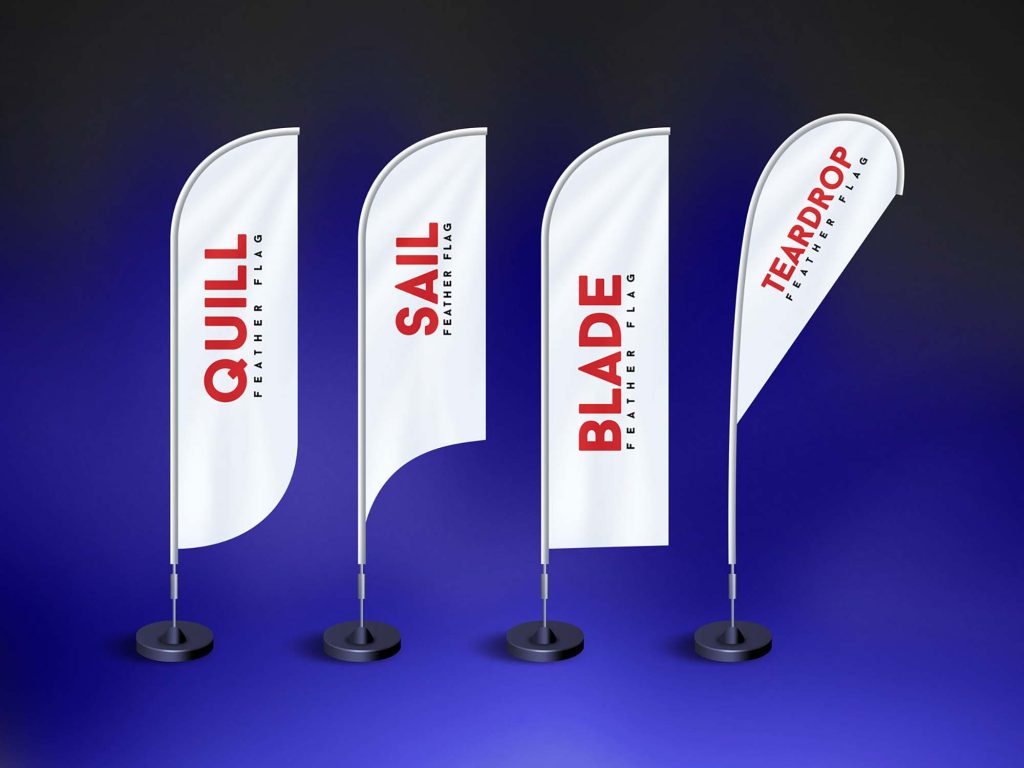
Feather flags have a tall, curved profile that creates a recognizable display. They are commonly used outside retail stores, restaurants, exhibitions, and event venues.
Their shape provides a vertical area for logos and short promotional messages. They are particularly useful when businesses want to make their presence noticeable without installing a wide banner.
Teardrop Flags
Teardrop flags feature a rounded upper section and a narrower lower profile. Their supporting structure helps maintain the distinctive outline when assembled correctly.
They are often selected for outdoor promotions where a compact, recognizable flag shape is preferred.
Rectangular Flags
Rectangular flags provide a straightforward layout for text, logos, and product graphics. Their broader appearance can be useful when a campaign requires more space for branding information.
The supporting hardware should be compatible with the flag’s dimensions and intended installation conditions.
Concave Flags
Concave flags feature an inward-curved edge that gives them a distinctive appearance. They can provide an alternative to conventional promotional banners for businesses seeking a different visual style.
As with other flag designs, the choice should consider available display space, graphics, and the compatibility of the pole and base.
Selecting Suitable Materials for Different Conditions
The quality of the fabric and supporting components has a direct effect on how well an advertising flag performs over time.
Fabric Strength and Construction
Outdoor flags should be made from materials appropriate for repeated handling and environmental exposure. Businesses should review fabric thickness, stitching, edge finishing, and the manufacturer’s intended-use recommendations.
Reinforced seams and properly finished edges can help reduce wear during regular use.
Printing Quality
Clear graphics are essential for effective advertising. The printing process should produce colors and text that remain recognizable at the expected viewing distance.
For campaigns involving frequent outdoor exposure, ask about print durability and resistance to fading. High-resolution artwork also helps maintain a professional appearance.
Pole Materials
Flag poles are commonly made from materials such as fiberglass, aluminum, or combinations of different components.
- Fiberglass: Offers flexibility and is commonly used in portable flag systems.
- Aluminum: Provides lightweight construction and corrosion resistance when properly finished.
- Composite components: May combine different material properties depending on the product design.
The most suitable choice depends on flag size, intended frequency of use, portability requirements, and the manufacturer’s specifications.
Matching the Base to the Installation Surface
A flag is only as practical as the support system holding it in place. Selecting a compatible base is particularly important when displays are installed outdoors.
Ground Spikes for Soft Surfaces
Ground spikes are designed for surfaces such as grass and soil. They can be useful at sporting events, festivals, outdoor markets, and temporary promotional areas.
Before installation, check the ground conditions and ensure the spike can be inserted securely.
Cross Bases for Hard Surfaces
Cross bases are commonly used on flat surfaces such as concrete, pavement, and indoor exhibition floors. Some designs can accommodate additional weights to improve stability.
Their suitability depends on the flag dimensions, surface conditions, and manufacturer’s recommendations.
Weighted Bases
Weighted bases provide additional mass and are useful where ground penetration is not possible. They may be suitable for outdoor commercial spaces when selected according to the size of the flag and expected conditions.
Water-Fill Bases
Some portable bases can be filled with water to increase their weight during installation. They are convenient for transportation because they can be carried empty and filled at the display location.
Always check the base capacity and the recommended flag size before use.
Selecting Wind Flags for Different Advertising Environments
The ideal flag depends not only on the weather but also on where the promotion will take place.
Retail Storefronts
Retail businesses often place flags near entrances to advertise discounts, new arrivals, and seasonal offers. A compact base and readable vertical design can help attract attention without occupying too much space.
For locations with nearby pedestrian traffic, ensure that the display does not obstruct walkways or entrances.
Roadside Promotions
Businesses advertising near roads need displays that are visible from an appropriate distance. Larger graphics and short messages can help drivers and passengers recognize the promotion quickly.
However, flags should be installed only in permitted areas and positioned away from traffic hazards. Stability is especially important in exposed roadside locations.
Sporting Events and Outdoor Festivals
These gatherings often involve open spaces where wind conditions can change throughout the day. Flags can identify sponsors, teams, vendors, and activity areas.
Organizers should select suitable bases for the ground surface and monitor weather conditions throughout the event.
Trade Shows and Exhibitions
Indoor exhibitions generally offer more controlled environmental conditions, making portability and appearance important selection factors.
Lightweight flag systems can be useful for exhibitors who need to transport and assemble displays at different venues.
Restaurants and Hospitality Businesses
Restaurants, cafés, and hotels can use flags to identify entrances, highlight services, or promote special offers. Designs should complement the business’s existing branding and remain easy to read from nearby pedestrian areas.
How to Design a Flag for Better Advertising Results
Even a durable flag may have limited marketing value if its message is difficult to understand. Good design makes the display more useful and helps audiences recognize the brand.
Consider these guidelines:
- Prioritize the main message: Make the business name, logo, or promotional offer easy to identify.
- Use strong color contrast: Ensure that text and graphics remain visible against the background.
- Keep wording brief: Avoid lengthy descriptions that are difficult to read while walking or driving past.
- Choose suitable typography: Use clear fonts and lettering large enough for the intended viewing distance.
- Maintain brand consistency: Match colors and visual elements with other advertising materials.
- Check the printable area: Keep important information away from edges and attachment points.
A simple design with one clear focal point is often more effective than a flag crowded with multiple messages.
Maintenance Tips for Longer-Lasting Performance
Regular care can help preserve the fabric, printed graphics, and supporting equipment.
- Inspect the fabric for tears, loose stitching, or fading.
- Check pole sections and connectors before each installation.
- Examine the base for cracks, corrosion, or other damage.
- Clean the flag according to the manufacturer’s instructions.
- Allow wet fabric to dry completely before storage.
- Use a protective carrying case when transporting the equipment.
- Remove or secure displays when weather conditions exceed their recommended operating limits.
These steps are particularly important for businesses that reuse their promotional flags across multiple campaigns and locations.
Common Mistakes to Avoid When Selecting Wind Flags
Some purchasing and installation mistakes can reduce the effectiveness of an outdoor display. Choosing a base without considering the ground surface, overlooking flag dimensions, or ignoring local weather conditions can create avoidable problems.
Businesses should also avoid selecting products based only on appearance or price. Material quality, hardware compatibility, printing durability, and manufacturer guidance all deserve attention.
Another common mistake is leaving flags installed during severe weather. Even well-constructed equipment has operating limits, so displays should be taken down when conditions become unsuitable.
Conclusion
Selecting the best wind flag requires careful consideration of weather, advertising objectives, flag design, materials, and installation requirements. A suitable combination of fabric, pole, and base can help businesses create an attractive display that fits its intended environment.
By assessing local conditions, choosing readable graphics, and following proper installation and maintenance practices, businesses can make better use of outdoor promotional flags. Whether used at a retail entrance, public event, exhibition, or roadside location, the right display can support brand recognition and communicate marketing messages effectively.