
Electric Skid Loader vs. Compact Wheel Loader: Key Differences Explained
Choosing the right compact loading equipment can significantly affect productivity, operating costs, and jobsite efficiency. Electric skid loaders and compact wheel loaders are both designed to move materials, transport loads, and support construction, landscaping, agriculture, and industrial operations. However, they differ in steering systems, maneuverability, operating characteristics, and suitability for particular tasks.
An Electric Skid Loader uses battery power and a skid-steering design to handle tasks in confined areas, while a compact wheel loader generally uses an articulated steering system to maneuver and transport materials. Understanding these differences helps buyers choose equipment that matches their working environment, material-handling requirements, and daily operating schedule.
What Is an Electric Skid Loader?
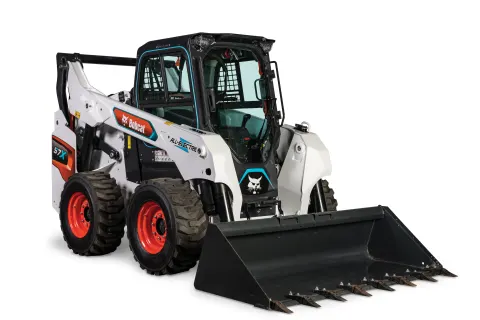
An electric skid loader is a compact loader powered by a rechargeable battery and electric motors. It typically uses skid steering, which allows the machine to turn by driving its wheels or tracks at different speeds or in opposite directions.
This steering arrangement gives the machine a small turning radius and makes it useful in restricted spaces. Depending on the model, an electric skid loader may support buckets, pallet forks, grapples, augers, and other compatible attachments.
Common applications include:
- Indoor construction and renovation.
- Landscaping and property maintenance.
- Material handling in confined work areas.
- Agricultural tasks in suitable facilities.
- Moving loose materials and clearing debris.
Electric skid loaders can be especially useful where low local emissions and reduced operating noise are important. Their suitability depends on battery runtime, charging access, load requirements, and the conditions in which they will operate.
What Is a Compact Wheel Loader?
A compact wheel loader is a smaller version of a conventional wheel loader. It generally uses an articulated steering system, in which the front and rear sections pivot relative to one another to change direction.
Compact wheel loaders are commonly designed for loading, carrying, and transporting materials across construction sites, farms, landscaping projects, and industrial yards. Many models use a front-mounted bucket, although compatible attachments can expand their capabilities.
Depending on the design, compact wheel loaders may offer advantages for moving materials over longer distances within a worksite. Their steering geometry and wheel arrangement can also provide a different handling experience from skid-steer equipment.
Compact wheel loaders are available in different power configurations. When comparing one with an electric skid loader, buyers should verify whether the wheel loader is diesel-powered, electric, or offered in another configuration.
Electric Skid Loader vs. Compact Wheel Loader: Main Differences
Although both machine types perform material-handling tasks, their designs influence how they work.
| Feature | Electric skid loader | Compact wheel loader |
|---|---|---|
| Typical steering | Skid steering | Articulated steering |
| Turning behavior | Can turn within a very small area | Turns by articulating the machine’s front and rear sections |
| Power source | Rechargeable battery | Depends on the model; often diesel or electric |
| Working environment | Useful in confined areas and suitable indoor applications | Often suited to outdoor material handling and site transport |
| Surface interaction | Skid steering can cause tire or surface scrubbing during tight turns | Articulated steering generally turns without the same skid-steering action |
| Attachment options | Often supports buckets, forks, grapples, and specialized tools | Commonly supports buckets, forks, and selected loader attachments |
| Travel and material movement | Useful for compact work areas and repeated positioning | Often practical for carrying materials across a worksite |
| Operating considerations | Battery runtime and charging availability are important | Power source, steering layout, travel requirements, and maintenance vary by model |
These are general design differences. Actual performance depends on the specific machine, tire or track configuration, attachment, and operating conditions.
1. Maneuverability and Turning Space
Maneuverability is one of the most noticeable differences between the two machine types.
Electric skid loader
Skid steering allows an electric skid loader to turn within a very small area. This is valuable when working between obstacles, inside buildings, or around tightly spaced materials.
However, skid steering causes the tires or tracks to scrub against the ground during tight turns. On delicate surfaces, this can increase wear or leave marks, depending on the machine and ground conditions.
Compact wheel loader
A compact wheel loader generally turns through articulation between its front and rear sections. This creates a different turning path and may be more suitable for moving materials through open areas.
The machine still requires sufficient space for turning and positioning. Its suitability for confined spaces depends on its dimensions, articulation angle, and operating layout.
Which is better? An electric skid loader may be preferable where turning space is extremely limited. A compact wheel loader may suit sites where the machine regularly travels between loading and unloading points.
2. Power Source and Energy Management
The power source affects equipment availability, operating costs, and the infrastructure required to keep the machine working.
Electric skid loader
An electric skid loader uses a rechargeable battery to power its drive and other machine systems. It produces no tailpipe exhaust during operation and may operate more quietly than a comparable diesel-powered machine.
Its working time depends on battery capacity, load intensity, hydraulic use, ambient temperature, and travel patterns. Buyers need to plan charging around the expected work schedule.
Compact wheel loader
Compact wheel loaders are often diesel-powered, although electric models are also available. Diesel machines can typically return to work quickly after refueling, which may be useful for extended shifts or remote jobsites.
Electric compact wheel loaders share some of the charging considerations associated with electric skid loaders. Their actual energy use and operating duration depend on their powertrain and workload.
Which is better? Electric skid loaders can be attractive where charging is available and local exhaust emissions are a concern. Diesel compact wheel loaders may be practical for long shifts without convenient charging access.
3. Lifting Capacity and Material Handling
Lifting performance is a key consideration when selecting any loader. However, neither machine type is automatically more capable in every situation.
The correct comparison should include rated operating capacity, tipping-load information, lift height, reach, attachment weight, and machine stability.
Electric skid loader
Electric skid loaders are designed to handle material movement in compact work areas. Depending on the model, they may lift soil, gravel, building supplies, pallets, and other materials within their specified capacity.
Their suitability for heavy lifting depends on the machine’s design and rated limits rather than the power source alone.
Compact wheel loader
Compact wheel loaders are often used for repeated bucket loading and carrying loose materials across a worksite. Depending on the model, they may provide a useful combination of bucket capacity, lifting height, and travel capability.
Buyers should compare the actual specifications of the machines under consideration rather than assuming that all compact wheel loaders have greater lifting capacity.
Which is better? The best choice is the machine that safely handles the required loads at the necessary height and reach while maintaining suitable stability.
4. Ground Conditions and Surface Protection
The ground surface can influence both productivity and equipment selection.
Electric skid loaders may be available with wheels or tracks. Wheeled models can be useful on suitable firm surfaces, while tracked configurations may offer benefits on some softer or uneven terrain. Actual traction and ground pressure depend on the design.
Compact wheel loaders generally use tires and articulated steering. They may be well suited to moving materials over suitable outdoor surfaces, including established access routes and construction yards.
For finished floors, landscaped areas, and delicate surfaces, buyers should consider tire type, ground pressure, turning behavior, and the possibility of surface damage.
Which is better? The decision depends on the surface, traction requirements, machine configuration, and how frequently the loader must turn in place.
5. Attachment Versatility
Attachments allow both machine types to perform more than basic bucket work.
Electric skid loaders may support buckets, pallet forks, grapples, augers, trenchers, sweepers, and other tools, depending on their mounting and hydraulic systems.
Compact wheel loaders commonly use buckets, pallet forks, grapples, and selected material-handling attachments. Their compatibility varies by manufacturer and model.
Before purchasing either machine, check:
- Attachment mounting compatibility.
- Hydraulic flow and operating pressure.
- Rated capacity with the attachment fitted.
- Attachment weight and reach.
- Additional electrical or hydraulic requirements.
- The effect of attachment use on energy consumption.
Which is better? An electric skid loader may be appealing for businesses that frequently switch between tasks in restricted areas. A compact wheel loader may be suitable for operations focused on bucket work and material transport. The available attachment range should be verified for each model.
6. Operating Costs and Maintenance
The total cost of ownership includes more than the purchase price. Buyers should consider energy, maintenance, parts, charging infrastructure, downtime, and the expected service life of major components.
Electric skid loaders generally have fewer engine-related service requirements than diesel machines. They do not require diesel engine oil changes or fuel filter replacement, although they still need inspections of hydraulic components, tires or tracks, electrical systems, batteries, and safety equipment.
A diesel compact wheel loader requires routine engine and fuel-system maintenance. Its operating expenses are influenced by fuel consumption, workload, service intervals, and parts availability.
Electric compact wheel loaders may offer some of the same engine-related maintenance reductions as electric skid loaders, depending on their design.
A useful comparison should estimate expenses over several years and use realistic working hours. Electricity may be less expensive than diesel fuel in some locations, but the overall savings depend on local rates, battery costs, purchase price, and equipment utilization.
7. Noise and Local Emissions
Workplace conditions can influence which loader is more appropriate.
Electric skid loaders produce no tailpipe exhaust while operating and are often quieter than diesel-powered equivalents. These characteristics may be useful in warehouses, indoor construction projects, and noise-sensitive locations.
Diesel compact wheel loaders produce exhaust emissions during operation and generally have more engine noise. They may still be suitable for outdoor sites where ventilation and noise are less restrictive.
Electric compact wheel loaders can also reduce local exhaust emissions, so buyers should compare the actual powertrains rather than relying only on machine categories.
It is important to remember that electric equipment can still generate noise from hydraulic systems, tires, attachments, and contact with materials. Dust, ventilation, and other workplace hazards also require appropriate controls.
8. Operator Comfort and Ease of Use
Operator comfort can influence productivity during long shifts. Before purchasing, evaluate the controls, visibility, seating or standing position, access to the operating station, and ease of performing routine tasks.
Electric skid loaders may have control systems designed to manage electric drive and hydraulic functions. Compact wheel loaders typically use controls suited to their articulated steering and loading operations.
The layout and features vary considerably by model. Some machines may include enclosed cabs, adjustable controls, heating, air conditioning, or visibility-enhancing features.
A practical demonstration is useful for checking whether operators can maneuver safely, maintain clear sightlines, and perform repetitive tasks comfortably.
9. How to Choose the Right Machine for Your Application
The best machine depends on the work being performed, the available space, the type of material, and the expected operating schedule.
Choose an electric skid loader when:
- You frequently work in narrow or confined areas.
- Compact turning capability is important.
- Indoor operation and reduced local exhaust emissions are priorities.
- You need a machine that supports several compatible attachments.
- Charging access and battery runtime match the daily workload.
Consider a compact wheel loader when:
- You regularly transport materials across a worksite.
- Articulated steering suits the available space and work pattern.
- Bucket loading and carrying are the primary tasks.
- Your application benefits from the particular capacity and travel characteristics of the selected model.
- The machine’s power source and operating costs fit your requirements.
These guidelines are starting points, not absolute rules. A compact wheel loader may perform well in some restricted environments, and an electric skid loader may be suitable for a range of outdoor tasks. The individual machine’s specifications should determine the final decision.
10. Questions to Ask Before Buying
Before investing in either machine, ask the supplier for clear answers to several practical questions:
- What is the rated operating capacity and maximum lift height?
- What are the machine’s overall dimensions and turning requirements?
- Which attachments are compatible?
- What hydraulic flow and pressure are available?
- For electric models, what are the battery capacity, expected runtime, and charging time?
- What operating conditions and surfaces is the machine designed for?
- What maintenance schedule and warranty coverage apply?
- Are replacement parts and qualified service technicians available?
- What are the estimated energy or fuel costs under the expected workload?
- Can the supplier arrange a demonstration using representative tasks?
Comparing these details helps buyers avoid selecting a machine based only on its price or a single headline specification.
Conclusion
Electric skid loaders and compact wheel loaders both offer useful material-handling capabilities, but their steering systems, operating characteristics, and typical applications differ. Electric skid loaders can be particularly valuable in confined spaces and suitable indoor environments, while compact wheel loaders are often used for loading and transporting materials across worksites.
The right choice depends on rated capacity, maneuverability, power source, attachment compatibility, ground conditions, charging access, and total ownership costs. By comparing these factors against actual job requirements, businesses can select equipment that supports safe operation, reliable performance, and long-term productivity.