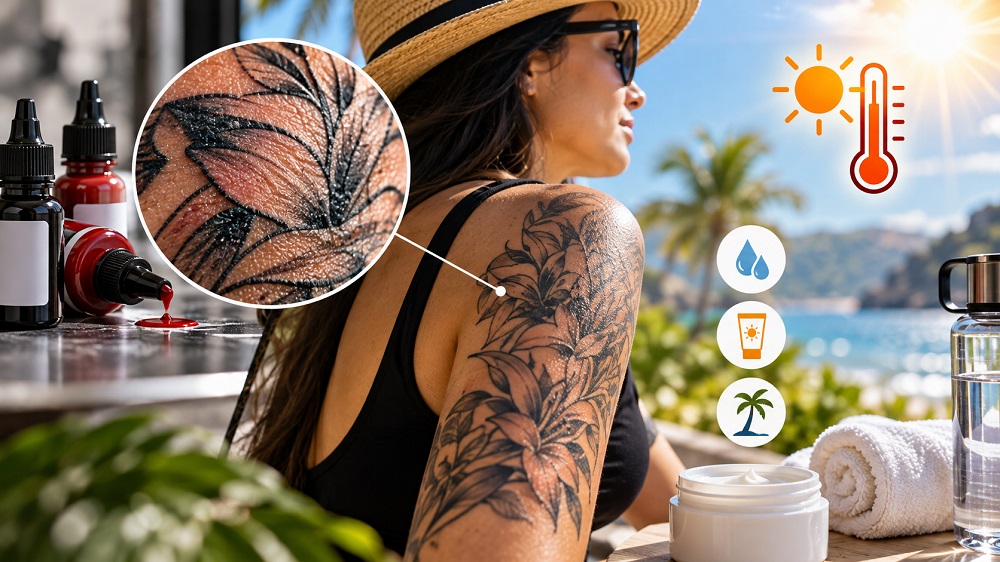

One of the popular vacation highlights is getting tattooed in warm and tropical places such as Thailand. But higher temperatures, humidity, and sweating present special problems for the healing process of the skin. The quality of the ink employed directly affects the healing process of the skin during warm weather changes, thus impacting the inflammation level, scab formation, and long-term pigment retention.
How does high-quality ink accelerate skin recovery in tropical climates?
Medical-grade tattoo inks are high-quality inks made with a non-toxic, micro-dispersed pigment and sterile carrier liquids like witch hazel and distilled water. These are hypoallergenic formulations, free of heavy metal fillers, resulting in much less tissue trauma when applied. The tattoo shops in Phuket, and also in other places in the tropical climate, create tattoos with high-quality inks.
Reducing skin inflammation decreases oozing of the plasma and helps the tattoo form a light “micro-scab” faster in warm conditions, which will help reduce exposure to airborne bacteria and to sweat that will form during warm weather.
What risks do low-grade tattoo pigments pose in hot and humid conditions?
Low-quality or unsigned inks often include solvents, plastic ingredients, and toxic materials such as lead or nickel. During hot weather, the heat causes blood vessels to enlarge and the pores to perspire, which leads to a strong allergic response, prolonged redness, and swelling in the area where the low-grade pigments are present.
In addition, expelling unsterile pigments into perspiring skin can significantly raise the danger of bacterial contamination, which can lead to painful contact dermatitis.
How does ink quality affect scabbing and infection risk during humid weather?
The soaking of scabs after healing in wet climates (termed “scab maceration”) can cause bacteria to enter the open wound. Quality vegan and organic inks lay down gently in the dermal layer without causing an inflammatory immune response against the foreign body. This causes even, uniform scabbing that doesn’t retain extra moisture or fluid inside, which helps to prevent infection of the fresh design.
Why do premium pigments offer superior resistance to sun damage and UV fading?
Pigment breakdown by photo-oxidation occurs more rapidly with exposure to the sun and sweating. High-quality brands of ink use lightfast, high-pigment density mineral and organic pigments that are resistant to UV damage.
With the correct post-inking care in warm weather, such as avoiding direct sunlight and applying breathable, protective second-skin bandages, high-quality ink will prevent bleeding and fading before its time when exposed to intense sunlight. When getting a bamboo tattoo in Patong or other places, use ink that is best for tropical climates.
What warm-weather aftercare practices protect high-quality ink?
During warm-weather healing, to help maintain high-quality ink:
- Prevent Submersion: Do not get the fresh tattoo wet in the ocean, swimming pools, hot tubs, or any other body of water for at least 2 weeks to avoid the risk of bacterial infection and ink leaching.
- Handle perspiration: Use clean paper towels, one at a time, to gently pat away any perspiration; do not rub with cloth towels.
- In high temperatures, use light moisturizers: Use thin layers of aftercare lotions that don’t contain fragrances to avoid blocking pores.
Conclusion
Quality of ink is the cornerstone of a safe and successful tattoo healing process. Premium, non-toxic dyes not only minimize inflammation, but also accelerate the scab’s stabilization and decrease the risk of humidity-related infections, leaving your tattoo looking vibrant and sharp even in tropical weather.