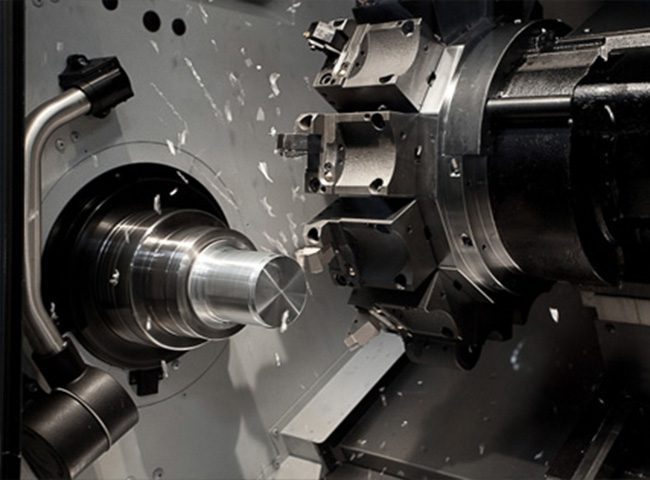

Spindle speed is one of the most important specifications to understand when evaluating a CNC lathe. It determines how quickly the workpiece rotates and directly influences cutting conditions, machining efficiency, surface finish, and tool life.
When comparing a CNC Lathe Machine for Sale, buyers should look beyond the maximum RPM listed in the specifications. The useful spindle-speed range, available torque, motor power, control system, and the materials being machined all affect how effectively the machine performs in real production environments.
What Is Spindle Speed?
Spindle speed refers to the rotational speed of the lathe spindle, normally measured in revolutions per minute (RPM). The spindle rotates the workpiece while the cutting tool removes material.
The appropriate speed depends on factors such as workpiece diameter, material, cutting-tool material, and machining operation. A higher RPM is not automatically better because excessive speed can generate heat and accelerate tool wear.
Why Spindle Speed Matters
Choosing appropriate spindle speeds helps balance productivity and machining quality. When the speed is properly matched to the application, cutting can be more stable and predictable.
Incorrect spindle speed can lead to several problems, including:
- Excessive heat generation
- Premature tool wear
- Poor surface finish
- Chatter and vibration
- Reduced cutting efficiency
- Damage to the workpiece or tooling
For this reason, spindle performance should be considered as part of the complete machining system.
Maximum RPM vs. Useful Speed Range
A CNC lathe’s maximum spindle speed can be an attractive specification, but it does not tell the entire story. A machine may have a very high maximum RPM while offering limited torque at lower speeds.
Different machining operations require different speed ranges. Smaller-diameter components may benefit from higher rotational speeds, while large workpieces often require lower speeds with sufficient torque.
When evaluating machines, consider the full operating range rather than focusing on the highest available RPM.
Spindle Speed and Workpiece Diameter
Workpiece diameter has a direct relationship with cutting speed. As diameter increases, the spindle generally needs to rotate more slowly to maintain an appropriate surface speed.
For example, a small component may be machined effectively at a relatively high RPM, while a large-diameter workpiece may require a substantially lower rotational speed.
This is why a CNC lathe should provide a speed range that matches the sizes of components your production process typically handles.
Understanding Cutting Speed
Cutting speed is commonly expressed in meters per minute or surface feet per minute, depending on the measurement system. It describes the speed at which the cutting edge moves across the workpiece surface.
A simplified relationship between cutting speed, workpiece diameter, and spindle speed can be expressed as:
RPM = Cutting Speed × 1000 ÷ (π × Workpiece Diameter)
The exact calculation depends on the units being used. CNC controls can often calculate and adjust spindle speed automatically when the appropriate machining parameters are programmed.
Constant Surface Speed
Many modern CNC lathes support constant surface speed, often referred to as CSS. Instead of maintaining one fixed RPM, the control adjusts spindle speed as the tool moves across different diameters.
This can provide more consistent cutting conditions during operations such as facing and turning, where the effective workpiece diameter changes.
Constant surface speed can contribute to more consistent surface finish and more predictable tool performance.
Spindle Power and Torque
Spindle speed should always be considered alongside spindle power and torque. High RPM can be valuable for certain applications, but demanding cuts may require substantial torque at lower speeds.
A machine intended for heavy turning should therefore be evaluated for its low-speed torque and overall spindle performance rather than maximum RPM alone.
The right combination depends on the materials, workpiece sizes, cutting depths, and tooling used in production.
Matching Speed to Different Materials
Material selection has a major influence on cutting speed. Aluminum, brass, mild steel, stainless steel, and other alloys have different machining characteristics.
Tool manufacturers typically provide recommended cutting-speed ranges based on the workpiece material and tool grade. These recommendations can then be used to determine suitable spindle speeds for specific operations.
Consider the Cutting Tool
The cutting tool is another important part of spindle-speed selection. Carbide inserts, high-speed steel tools, ceramic tools, and other cutting materials can have different recommended operating conditions.
Tool geometry and coating can also affect the appropriate speed. Buyers should therefore consider whether the CNC lathe can support the tooling strategy used by their production process.
Spindle Speed for Different Operations
Different machining operations can require different spindle settings.
Turning
Turning typically requires a balance between cutting speed, feed rate, depth of cut, and available spindle power. The appropriate RPM depends heavily on the workpiece diameter and material.
Facing
During facing, the cutting diameter changes as the tool moves toward the center of the workpiece. Constant surface speed can help maintain more consistent cutting conditions.
Threading
Threading generally requires controlled spindle rotation because the tool movement must remain synchronized with the spindle. The CNC control and machine’s synchronization capabilities are therefore important.
Drilling
Drilling on a CNC lathe also requires appropriate spindle speed based on drill diameter, material, and drill type. Larger drills commonly require lower RPM than smaller drills.
How Spindle Speed Affects Surface Finish
Spindle speed can influence the appearance and dimensional quality of a machined surface. If the speed is too low or too high for the selected tooling and material, surface finish may deteriorate.
However, surface quality is not determined by spindle speed alone. Feed rate, tool geometry, machine rigidity, coolant, and vibration can all have significant effects.
What Buyers Should Check
Before purchasing a CNC lathe, review the spindle specifications in relation to your actual machining requirements. Useful questions include:
- What is the minimum and maximum spindle speed?
- How much power is available across the speed range?
- What spindle bore is provided?
- Is constant surface speed supported?
- What chuck sizes are compatible?
- Is the spindle suitable for the materials being machined?
- Can the machine accommodate the required tooling?
These questions provide a better basis for comparison than maximum RPM alone.
Conclusion
Understanding spindle speed is essential when choosing a CNC lathe because rotational speed affects cutting performance, productivity, surface quality, and tool life. The ideal machine should provide a practical speed range with sufficient power and torque for the intended work.
Rather than selecting equipment based solely on maximum RPM, manufacturers should consider workpiece diameter, materials, cutting tools, machining operations, and production requirements together. This approach helps ensure that the spindle is properly matched to the application.
JSWAY