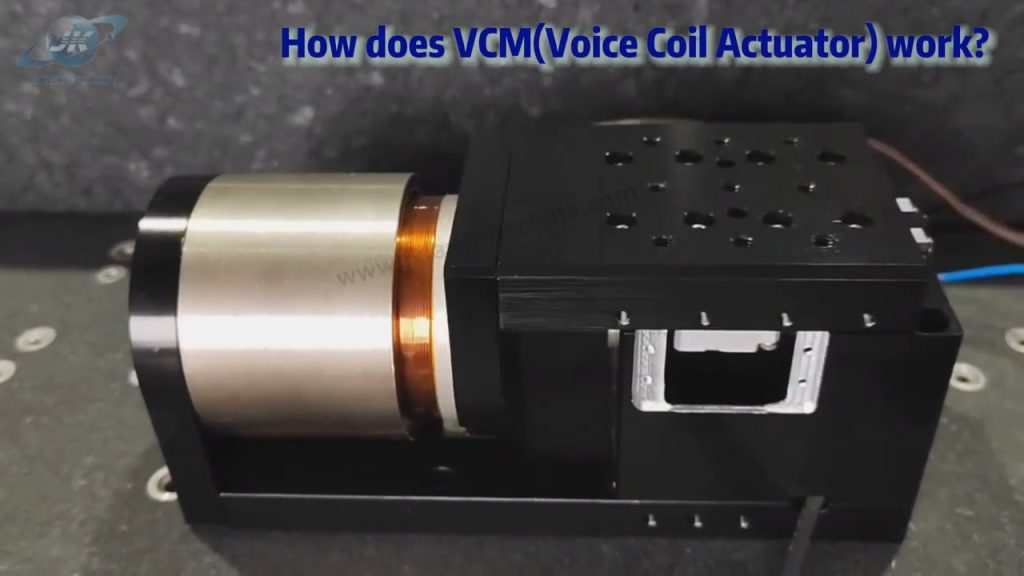

Voice coil actuators have become an essential part of modern precision motion systems, offering fast response, smooth linear movement, and high positioning accuracy. As industries continue to evolve toward smarter and more compact automation solutions, the future of this technology is shaped by improvements in materials, control systems, and integration methods.
In advanced motion engineering, a voice coil actuator is increasingly valued for its direct-drive electromagnetic design, which eliminates mechanical transmission components such as gears and screws. This allows for highly responsive motion control with minimal friction and wear. As demand grows for higher efficiency and miniaturized systems, manufacturers are focusing on enhancing both performance and durability.
Table of Contents
ToggleAdvancements in Material Technology
One of the key future trends in voice coil actuator design is the development of advanced materials. Engineers are exploring new magnetic alloys and lightweight structural materials to improve force density and thermal performance.
Key material innovations include:
- High-performance rare-earth magnets with stronger flux density
- Lightweight aluminum and composite housing structures
- Improved copper alloys for reduced electrical resistance
- Heat-resistant insulation materials for high-duty applications
These improvements allow actuators to deliver higher force output while maintaining compact size and thermal stability.
Miniaturization and Compact Design
As automation systems become smaller and more integrated, miniaturization is a major focus area. Future voice coil actuators are expected to be more compact while still delivering high precision and speed.
This trend is especially important in industries such as:
- Medical devices and surgical robotics
- Optical imaging and camera stabilization systems
- Micro-robotics and precision assembly tools
Smaller actuators enable integration into confined spaces without compromising performance, making them ideal for next-generation smart devices.
Integration with Smart Control Systems
Another significant trend is the integration of voice coil actuators with advanced digital control systems. Modern controllers use real-time feedback, AI-based optimization, and predictive algorithms to improve motion accuracy and efficiency.
These systems enhance performance by:
- Adjusting force output dynamically based on load conditions
- Reducing energy consumption through optimized control strategies
- Improving positioning accuracy with high-resolution feedback sensors
- Enabling predictive maintenance through data analysis
This level of intelligence allows actuators to operate more efficiently in complex and variable environments.
Improved Thermal Management Solutions
Thermal performance remains a critical challenge in voice coil actuator design. Future developments are focused on improving heat dissipation to maintain consistent performance during continuous operation.
Emerging solutions include:
- Advanced cooling structures integrated into actuator housings
- Use of thermally conductive composite materials
- Optimized coil winding designs for reduced heat generation
- Enhanced airflow and passive cooling techniques
Better thermal control not only improves efficiency but also extends operational lifespan.
Expansion into New Industrial Applications
Voice coil actuators are expected to expand into a broader range of industries as their performance capabilities improve. Their precision and responsiveness make them suitable for emerging technologies that require fine motion control.
Future application areas include:
- Autonomous robotics and AI-driven manufacturing systems
- Advanced semiconductor lithography and nanofabrication
- Space exploration instrumentation and satellite mechanisms
- Wearable medical devices and adaptive assistive technology
As these industries evolve, demand for high-performance linear motion systems will continue to increase.
Conclusion
The future of voice coil actuator technology is driven by innovation in materials, miniaturization, smart control systems, and thermal management. These advancements are enabling more compact, efficient, and intelligent motion solutions across a wide range of industries. As automation and precision engineering continue to advance, voice coil actuators will remain a foundational technology in next-generation motion control systems.