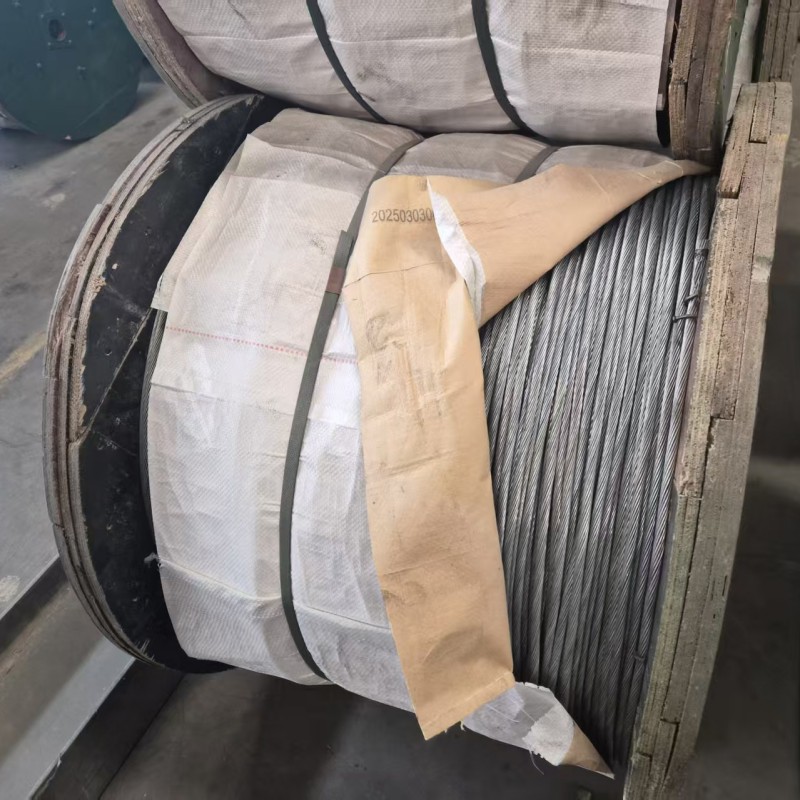

Seven individual steel wires, carefully arranged into one compact strand, create a material designed to handle demanding tensile loads. This construction is more than a manufacturing detail: the number of wires, their dimensions, the way they are twisted together, and the quality of the steel all influence how the finished product behaves in service. Add a protective zinc coating, and the result is a steel strand suited to many outdoor support and infrastructure applications.
The appeal of 7 Strand Galvanized Steel Wire comes from this combination of construction and surface protection. It offers a practical way to transfer pulling forces through a relatively compact assembly while helping limit corrosion during outdoor exposure. To understand where it fits, it is useful to look first at how the strand is made and what its specifications actually tell a buyer.
What Does a Seven-Wire Strand Look Like?
A typical seven-wire strand consists of one central wire surrounded by six outer wires. The wires are laid helically around the core to form a unified assembly. This arrangement is widely used in steel strand manufacturing because it produces a compact, balanced structure with useful tensile properties.
The central wire provides the core, while the surrounding wires contribute to the strand’s overall load-bearing capacity. The finished diameter depends on the dimensions of the individual wires and the manufacturing process. Variations in wire size, lay length, steel grade, and production tolerances can result in different mechanical characteristics.
It is important to distinguish the strand’s construction from its performance rating. The fact that a product contains seven wires does not, by itself, establish its tensile capacity. Buyers should check the manufacturer’s declared specifications and test results to determine whether a particular strand meets the requirements of an application.
How the Steel Achieves Its Strength
The performance of a galvanized steel strand begins with the quality of its raw material. Steel composition, wire drawing, heat treatment where applicable, and manufacturing controls all influence the mechanical properties of the individual wires.
During production, steel is drawn into the required wire dimensions and then formed into the specified strand arrangement. The finished assembly is designed to carry tensile loads, making it useful where components need to remain under tension rather than simply support weight through compression.
Several factors determine its strength in practice:
- Steel grade: Influences the tensile properties of the individual wires.
- Wire diameter: Contributes to the strand’s overall cross-sectional area and mechanical capacity.
- Stranding process: Affects the geometry and consistency of the finished assembly.
- Elongation characteristics: Describe how the strand extends under specified loading conditions.
- Manufacturing quality: Helps ensure predictable dimensions and performance from batch to batch.
For engineering applications, the specified minimum breaking force and permitted working load are more useful than a general description such as “high strength.” The design must also include suitable safety factors and account for the efficiency of the connections.
Why the Galvanized Finish Matters
Steel’s mechanical strength makes it valuable for structural support, but outdoor exposure creates a separate challenge. Moisture and oxygen can cause untreated steel to rust. Over time, corrosion may reduce the effective metal area and affect the reliability of a tensioned component.
Galvanization addresses this problem by applying zinc to the steel surface. Zinc acts as a protective barrier and can also provide sacrificial protection where small areas of steel become exposed. This helps slow corrosion and makes galvanized strand suitable for many outdoor environments.
The protective effect is not unlimited. Coating thickness, uniformity, manufacturing quality, handling damage, and local atmospheric conditions all influence durability. Installations near the sea or in industrial areas may face more aggressive exposure than those in relatively mild environments.
When comparing products, check the specified zinc coating requirements rather than assuming all galvanized strands provide the same level of protection.
Applications: Where Seven-Wire Galvanized Strand Is Useful
The strand’s combination of tensile capacity and corrosion protection makes it relevant to several infrastructure and industrial uses. Its suitability in each case depends on the design loads, product standard, and installation method.
Utility and Power Infrastructure
Support arrangements for overhead power networks may use galvanized steel strands in guying and related structural applications. These components help counter lateral forces acting on poles and other structures. Their dimensions and strength ratings must be selected according to the network design, anchor capacity, and expected environmental loads.
Communication and Aerial Cable Systems
Certain telecommunications installations use steel strands to support aerial cables or provide tension members within an overhead arrangement. The strand helps manage mechanical loads across spans, while suitable fittings secure the cable assembly to its supporting structure.
Structural and Industrial Support
Industrial sites may require tension members for bracing, anchoring, or other engineered support arrangements. Galvanized steel strand can be considered where the design calls for a strong cable-like component that will remain exposed to outdoor conditions.
Infrastructure and Construction Projects
Selected construction and infrastructure systems use steel strand products as part of tension-based support solutions. The required configuration depends on the project’s structural calculations and the relevant product standards. Not every seven-wire strand is suitable for every structural use, so application-specific approval is essential.
Reading the Specification Before Purchasing
A product description provides an introduction, but technical documentation is what allows engineers and procurement teams to make a meaningful comparison.
| Specification | What it tells the buyer |
|---|---|
| Construction | Confirms the seven-wire arrangement and strand configuration. |
| Nominal diameter | Identifies the strand’s overall size. |
| Tensile strength | Describes the mechanical strength of the steel. |
| Minimum breaking force | Indicates the specified force at which the strand fails under a defined test. |
| Elongation | Shows the strand’s extension characteristics under test conditions. |
| Zinc coating | Defines the level of corrosion protection. |
| Applicable standard | Establishes the technical and quality requirements used for manufacture and testing. |
A buyer should also confirm delivery length, dimensional tolerances, packaging, traceability, and inspection documentation. For large orders, consistent production quality is particularly important because variations between batches can complicate installation and quality control.
Handling, Connections, and Installation
A strand’s rated strength is only meaningful when the complete assembly can transfer loads safely. Incorrect fittings, unsuitable anchor points, or poor installation practices can create weak locations even when the wire itself meets its specification.
Before installation, confirm that grips, clamps, sockets, and other accessories are compatible with the strand’s diameter and construction. Avoid sharp bends, crushing, kinks, or rough handling that may deform individual wires. Where the design requires a specific tension, use suitable equipment and follow the approved procedure rather than estimating tension by appearance.
The support structure and its foundation must also be capable of carrying the forces transferred through the strand. This is especially important for guyed poles, towers, and other installations where tension changes can affect overall stability.
Maintaining Performance After Installation
Galvanized steel strand generally requires less corrosion-related attention than unprotected steel, but inspection remains necessary. Environmental exposure and mechanical damage can affect its condition over time.
Maintenance checks should look for broken wires, visible rust, damaged zinc coating, loose terminations, unusual deformation, and movement at anchor points. The inspection interval should reflect the operating environment, structural importance, and applicable maintenance standards. Any strand showing signs of significant damage should be assessed by qualified personnel before it remains in service.
Making an Informed Material Choice
Seven-wire galvanized steel strand is not defined by its wire count alone. Its usefulness comes from the relationship between strand geometry, steel quality, tensile performance, and corrosion protection. Those properties make it a candidate for selected utility, communication, industrial, and infrastructure support systems.
The right purchasing decision starts with the application’s actual loading conditions and environmental demands. By checking verified mechanical ratings, coating requirements, relevant standards, and connection compatibility, project teams can choose a strand that is appropriate for the work rather than relying on appearance or a broad product label.